


2026 Reforestation Season Update
Updated: Aug 31

Our 2026 reforestation season officially began on June 1. We put on our new gear, laced up our boots, and headed into the field excited and ready for what we knew would be a long season ahead.
But we also started with a lot of uncertainty.
I want to be very open with you: this has been a difficult year. We began 2026 with a very clear plan. We expected to restore approximately 35 hectares in Los Santos and another 100 hectares in Herrera—the first time we would undertake restoration at this scale in Herrera.

From January through May, we worked hard to be ready. We built new community nurseries, partnered with our network of local micro-producers, expanded production in our own nursery, and prepared to establish agroforestry systems combining cacao with plantain, pigeon pea, otoe, and other crops. Because of the scale of the work, we organized three different field crews so we could work in several locations at the same time.
Despite all that planning, we encountered significant delays in administrative processes and project disbursements. By May, we still did not know whether some of the projects we had spent months preparing for would actually be implemented this year. Yet many of the expenses necessary to be ready for the rains had already been made.
And then nature added another major challenge.
A strong and rapidly intensifying El Niño is affecting the region. NOAA currently reports that El Niño is strengthening, with more than a 90% probability of becoming a very strong event during the Northern Hemisphere fall and winter of 2026–27. Here in Azuero, what we have experienced on the ground has been extremely challenging: entire weeks without meaningful rainfall during what should be our rainy season.
One of the hardest things to explain about restoration is that nature's timeline is not necessarily our timeline.

In Azuero, our planting season runs from June through the end of August for a reason: we need the rains to give young trees enough time to establish before the dry season. Seed collection and nursery production take place months earlier, generally from January
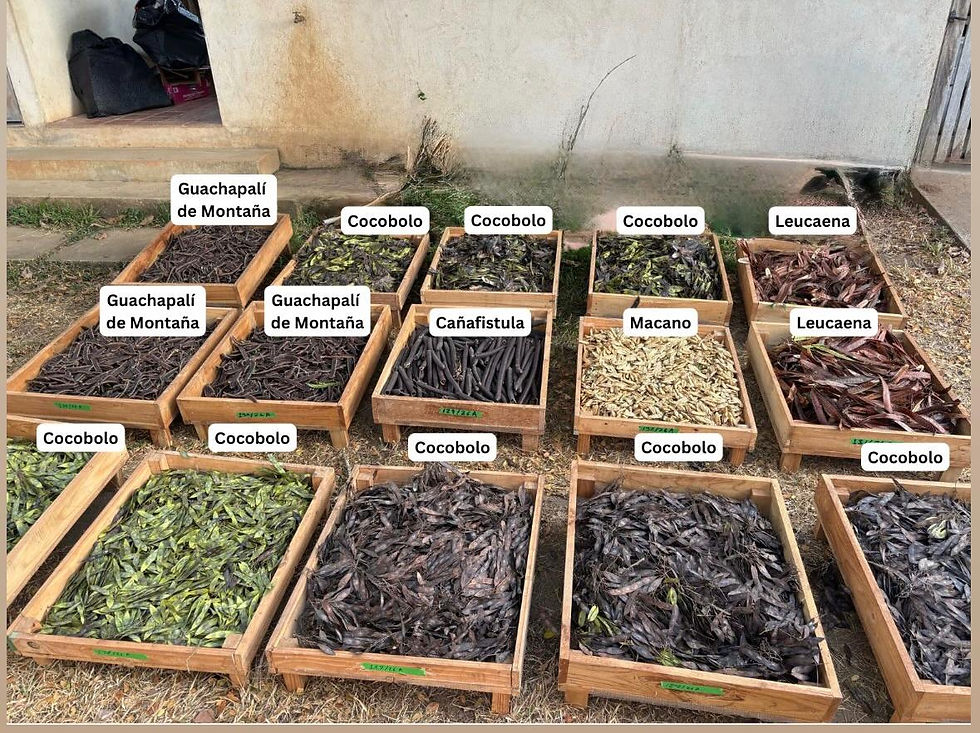
through May and sometimes beginning the previous year. Then comes maintenance, monitoring and eventually replanting where necessary.
We have to work according to the rains, the availability of seeds and the rhythms of the landscape. When circumstances change, we have to adapt.
Fifteen properties, fifteen different stories

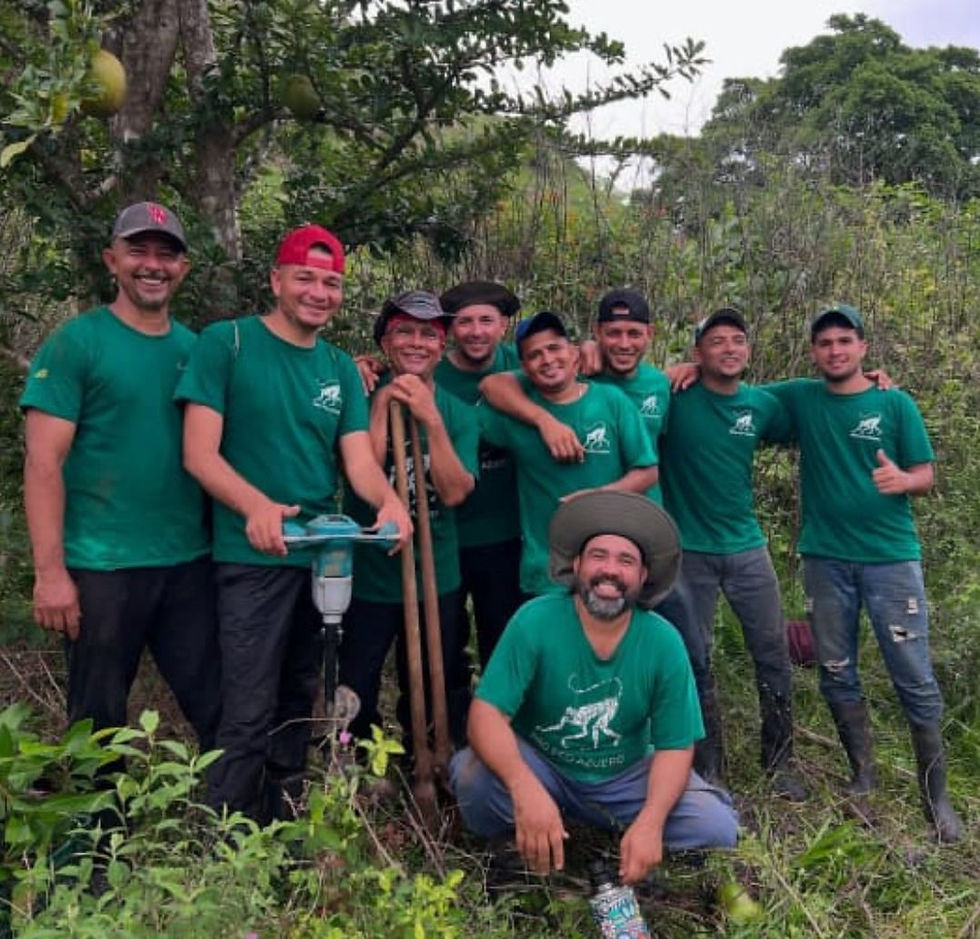
Despite all the uncertainty, on June 1 Los Magníficos, our local reforestation crew, started planting in Los Santos.
This year, we have worked across 15 different properties in Herrera and Los Santos, each with different conditions, different restoration needs and, most importantly, a different story behind it.
Some landowners are restoring their properties because they want forests to return and wildlife corridors to grow. Others want to protect streams, rivers and natural springs.
But some of the stories we encountered this year deserve special attention.
One thing that has made us particularly happy is seeing more women making decisions about the future of their land.

Hannah, for example, is a young woman from Los Santos who recently married. She and her husband have decided to transform areas of their cattle pasture back into forest, with the dream of creating a sanctuary for biodiversity.

On another property, two sisters—granddaughters of cattle ranchers—have made a different choice for the land inherited by their generation. Their grandfather owned cattle farms, but they believe that part of what they leave to future generations should be healthy, resilient land filled with trees and biodiversity.
And then there is the story of Mr. Alcides, one of my favorites from this season.

Mr. Alcides is what we would affectionately call an old-school cattle rancher. He has spent his life working his farm. But his granddaughters came to him with a request: they wanted to restore part of the property and protect a natural spring. They asked their grandfather if he would give them one hectare to reforest.
He said yes.
Today, that hectare is planted. In the not-so-distant future, those girls will watch a forest grow where there was once pasture, surrounding and protecting the water source they wanted to save.
That is generational change happening right in front of us.
We also worked in a very different landscape this year: the Tonosí municipal landfill. Municipalities across the region are beginning to look for ways to rehabilitate degraded sites, and the Mayor of Tonosí approached Pro Eco Azuero to help bring life back to this landscape.
We planted a green buffer that will help improve the landscape, reduce dust, create habitat, capture carbon and represent a first step toward transforming a heavily degraded site into a healthier space.
More than 700 volunteers joined us

Reforestation season is hard work, but somehow, many days also felt like a celebration.
This year, more than 700 volunteers participated in our planting season. They came from Panama and from around the world, including the United States, Brazil, England, Portugal and Spain.
We once again welcomed interns from Princeton University, corporate volunteers, university students, Global Glimpse groups from the United States, FutureSense Foundation volunteers from the United Kingdom, Fundación Sus Buenos Vecinos volunteers, local youth, our Pro Eco Pelaos, and many others who were willing to put on their boots, get muddy and plant alongside us.
Some days were particularly special.
On June 26, together with Panama's Ministry of Environment, we celebrated our Gran Día de Reforestación with a traditional community Junta de Reforestación. More than 100 volunteers joined us—children and adults, Scouts from Herrera, university students, community members and our Pro Eco Pelaos. And because this is Azuero, we did it our way: after planting came traditional sancocho and tamborito.
We held another large Junta de Reforestación in Las Trancas de Guararé, where approximately 100 people from different parts of the world joined us to plant more than 1,000 trees. At the end of the day, local women dressed in traditional polleras showed our international volunteers how we celebrate in Los Santos. Soon enough, everyone was dancing to the sound of the tamborito.

We were also honored this season by a visit from Panama's Minister of Environment, who joined our volunteers in the field and planted a tree with his own hands.
Restoration also means changing how we produce

This season has also allowed us to expand beyond traditional reforestation.
Through Azuero Verde, a Ministry of Environment initiative implemented with support from FAO, we are conducting a series of Farmer Field Schools with communities in Herrera. One important component is the establishment of agroforestry systems that combine cacao with plantain, pigeon pea, otoe and other species.
These systems are important to us because restoring Azuero cannot mean separating conservation from the livelihoods of the people who live here. We need landscapes where forests can return, biodiversity can recover and rural families can also produce food and generate income in ways that are compatible with healthier soils and ecosystems.
At the end of the planting season, we finally received confirmation that the larger 100-hectare restoration project planned for Herrera will move forward. Because the delays made it impossible to responsibly plant all 100 hectares within this year's rainy-season window, we will request an extension to complete that portion during the next planting season.
The cacao agroforestry component, however, is moving forward now. As I write this update, our field team is still out there establishing these systems.
Adapting to El Niño
The difficult rainy season has also forced us to adapt the way we plant.
This year, we are using hydrogel around newly planted seedlings in some areas to help retain moisture around their roots during prolonged periods without rain. It adds cost and additional work to the planting process, but under these conditions, we believe it gives the seedlings a better chance of establishing.
Even with these measures, we have to be realistic. Based on the conditions we have experienced, we are preparing for survival rates that could be around 60% in some of the most affected areas, 50%—one of the lowest we have experienced in many years.
We know that means we may have to replant a significant number of seedlings next year. But that is part of doing restoration responsibly. We don't count success simply by how many trees we put into the ground.
Every seedling planted through our restoration program is georeferenced, allowing our team to return to the sites and monitor survival and growth over the coming years.
And the end of planting season does not mean the end of the work.
On September 15, our maintenance season begins. Our crews will return to the restoration sites to clear competing vegetation around each tree, assess their condition and continue caring for the areas we planted. Where trees have not survived, we will document those losses through our monitoring system and prepare to replant.
Because planting a tree is only the beginning. Restoration means coming back.
Looking back on the season

I will be honest: this season has been nerve-racking.
There were moments when we did not know whether projects we had spent months preparing would move forward. There were financial uncertainties, administrative delays and weeks when we looked at the sky waiting for rain that simply did not come.
But now, as we look back, we also see something else.
We see 15 different landscapes beginning to change.
We see more than 700 people who planted alongside us.
We see young women deciding that the farms inherited by their generation can have a different future. We see granddaughters convincing their cattle-ranching grandfather to give one hectare back to nature. We see communities, children, international volunteers and government representatives planting side by side.
We see local teams earning income from restoration. We see people from completely different parts of the world sitting together after a long day of planting, eating sancocho and dancing tamborito.
Most importantly, we see everything we learned and everything we accomplished together.
And after all the uncertainty, the mud, the heat, the waiting, the lack of rain and the very long days, we find ourselves saying:
What a beautiful reforestation season this has been.
To every person who has donated, supported, volunteered, helped to this project: thank you.
Your support is part of what allows us to keep showing up—to collect seeds, grow seedlings, work with communities, plant, monitor, maintain, adapt when conditions change, and return again when a tree needs another chance.
The planting season may be ending, but our work with these trees is just beginning.

With Love, Hope, and Gratitude in our hearts, Equipo Mono!


Comments