


Preparing for Reforestation: Research, Community Engagement, and Cultivation During Dry Season
By Benjamin Yatt
Edited by Yadariselt Romano

Traveling through Panama’s Azuero peninsula, it is impossible not to be struck by the heat, dustiness, lack of shade, and sparseness of greenery, created by decades of unsustainable cattle ranching, agricultural practices and tourist development. Pro Eco Azuero is working to reverse this damage through reforestation efforts.
Reforestation requires much more than planting trees. This dry season, which started in December and lasts through May, the foundation has evaluated at least half a dozen plots of land, fostered relationships with dozens of farmers to garner community support, and processed thousands of seeds.
The foundation couldn’t do this alone: it has recruited hundreds of volunteers who are involved in every step in the process, including college students, office workers, and laborers in the environmental and agricultural sectors.
Collecting Seeds & Choosing Species
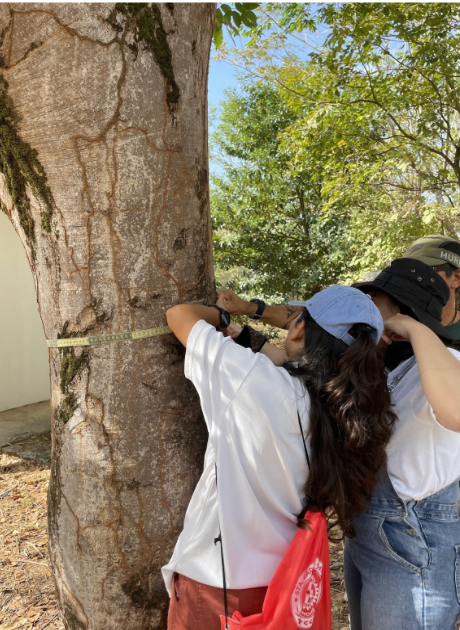
Preparation for the reforestation season begins with a rigorous selection process to select plant varieties most likely to survive and benefit both the environment and, in some cases, the local economy. “Equipo Mono” or Pro Eco Azuero staff are constantly on the lookout for trees whose seeds can be harvested for germination and planted later in the reforestation season or future years to come.
After receiving permission from local landowners, the team visits nature reserves and farms to gather seed pods. By the end of the dry season, the team will have collected thousands of seeds from a wide variety of tree species. The process of collecting seeds entails searching on the ground and sometimes using tools to cut tree branches. Below is a chart summarizing what Pro Eco Azuero staff look for in a tree when harvesting seeds:
Plant Feature | Benefits |
Native species | Habitat and food for endemic animal species, efficient to manage, grow and produce seeds quickly. Most importantly, adapted to survive in the tropical, dry forest. |
Healthy trees with a trunk diameter of at least 50 inches | Tree diameter is used as an initial indicator of suitability for seed harvesting. However, it is not the only criterion; trees must also exhibit signs of good health, free from pests or fungal infections. This helps ensure that only healthy seeds are collected and reduces the risk of spreading disease within the nursery. |
Has a deep rooting system | Deep roots help reduce heat and retain moisture, preventing erosion and increasing soil permeability to stop water and fertilizer runoff. |
Provides fruit, such as cacao, is used for timber or ornamental purposes. | A nutritious food source for livestock and communities, a source of income for farmers, and sometimes simply valued for its aesthetic appeal. |
Site Evaluation Process
The team meets with farmers or government officials near potential reforestation sites to evaluate environmental conditions, such as availability of clean water, soil health, presence of wildlife and livestock, and farm management practices in order to adequately prepare for reforestation and next year's rainy season.
To get there, staff fearlessly traverse steep dirt roads and ranchers herding cattle while balancing many other work tasks: calling other producers to coordinate site visits, speaking with producers to purchase materials, and exchanging findings with coworkers at the foundation’s office.
The crew surveys the land under intense sunshine and challenging terrain, taking soil samples to send for laboratory evaluation.
The team can visit up to three or four sites in one day.
Cultivation at Nurseries
The team builds planting structures, processes seeds, and cares for plants through germination.
Staff don’t just do this at the foundation in Pedasi; they also work with farmers cultivating plants around the region. Farmers gain meaningful economic and environmental benefits through this partnership. Pro Eco Azuero provides financial compensation for each sapling produced, supplies high-quality seeds for the reforestation season, and delivers hands-on training in sustainable agricultural practices. Crucially, the saplings cultivated by farmers are used to restore their own land, creating a self-sustaining, circular economy that keeps financial, ecological, and social benefits rooted within the community. This model not only strengthens local livelihoods but also drives long-term landscape restoration and resilience.
To optimize success, staff are also invested in modern innovations such as grafting, the precise joining of the most viable features of two plants.
Nursery Area One: Seed to Seedling

Nursery Area Two: Seedling to Sapling

Educating the Population
Reforestation is in vain if the local population doesn’t recognize its importance in the community or know how to care for the environment. Education, therefore, is the most important preparatory step.
The team at Pro Eco Azuero implements programming to engage the community, foster friendship, and change attitudes.
In addition to its children’s programs, Pro Eco Azuero also provides training for adults in sustainable farming and gardening techniques, encouraging farmers to reforest their land. Many ranchers live in remote, hard-to-access areas, making their inclusion especially important. By engaging these communities, the organization helps share practical knowledge that supports environmental stewardship, creates opportunities for passive income, and strengthens local communities through the adoption of sustainable practices.
While there are laws and monetary incentives spurned by the local government to prevent development on protected lands, require tree canopy in urban areas, and farm sustainably, enforcement can be challenging at times. Complementing these efforts, Pro Eco Azuero works closely with the local community, aligning its initiatives with their priorities. The organization carefully researches and tests each species it plans to germinate and collaborates closely with local producers to achieve shared goals. Through its dedicated tree-planting efforts, Pro Eco Azuero supports environmental sustainability while contributing to improved livelihoods and stronger communities.
As Emma, a regular volunteer from the Azuero peninsula, puts it: “There is so much work that goes into every tree and you don’t realize it unless you do it. It’s not just planting a seed. It’s lifting and moving around soil and preparing the seed beds. It’s extracting the seeds. It’s constant watering and maintenance. And why does it matter? Try to breathe without trees. Try to generate income without trees. The environment is the base of everything.”


Comments