


Behind the Scenes of Planting 63,000 Trees in Azuero
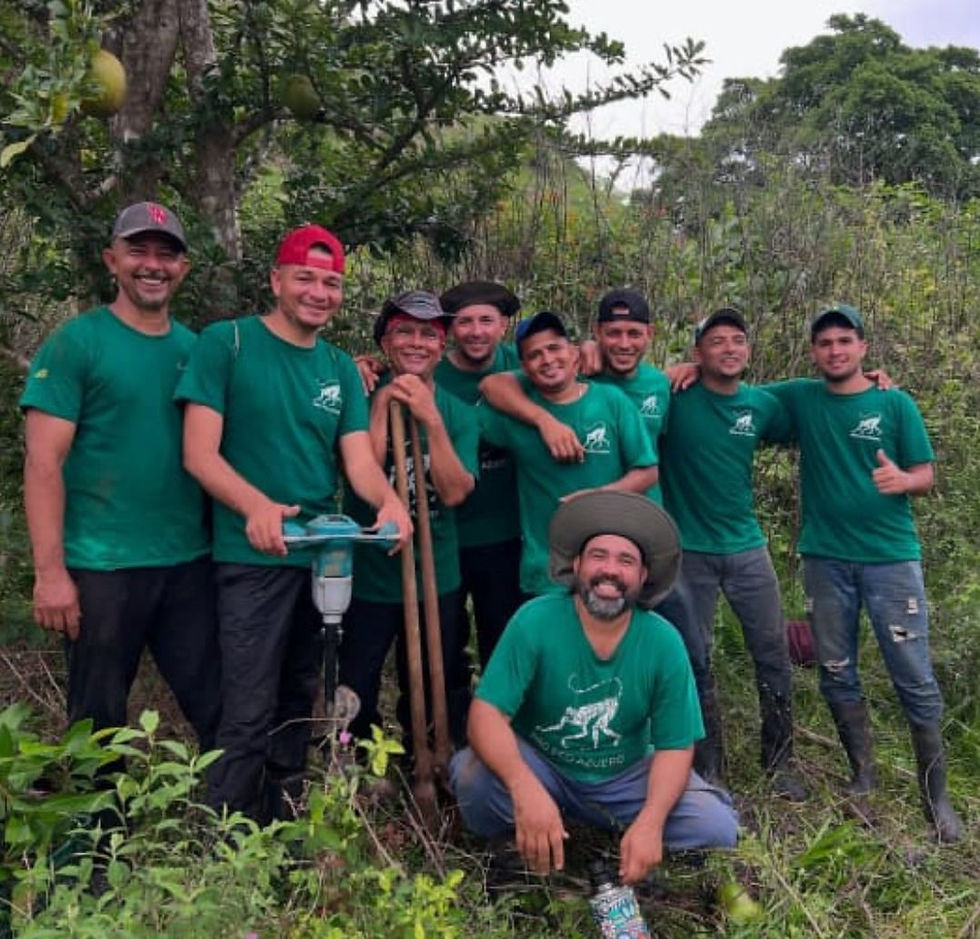
This year’s reforestation season was nothing short of extraordinary. Between May and August, as the first rains touched the soil of the Azuero Peninsula, our team at Fundación Pro Eco Azuero, together with hundreds of volunteers and community partners, set out on a mission: to bring life back to Panama’s endangered tropical dry forest. The result? 63,000 native trees planted across 12 farms—each one carrying a story of resilience, dedication, and hope.
Seeds of Change: Women Leading the Way
The journey begins long before the first hole is dug. The seedlings that reached the fields this season were nurtured with patience and care by our network of micro-producers in Bayano, Paritilla, Cambutal, Corozal, Bajo Corral, El Oro, Guararé, Nuario, Oria de Bayano, and Chumico. Most of these producers are women who, over the years, have been trained by Pro Eco Azuero in seed collection, nursery management, and plant care.
Working with ancestral knowledge and the support of our team, they cultivated native species essential to restoring the tropical dry forest. From soil substrates to nursery bags and seeds, we provided the tools they needed to ensure that every tree was healthy, strong, and ready for its journey into the wild.

Mapping the Forests of Tomorrow
Reforestation doesn’t begin with planting—it begins with planning. Before a single tree went into the ground, our forestry team visited each farm to carry out detailed assessments:
Drone surveys to understand the terrain.
Soil studies to measure degradation.
On-site inventories to choose the right mix of species.
Every decision—where to plant, how far apart, which species to combine—was designed to give these new forests the best possible chance to thrive.

The Magníficos: Guardians of the Field
At dawn, when most of the world was still asleep, our legendary field team, Los Magníficos, were already on the move. By 5:30 a.m., they were preparing the land: measuring distances, opening planting lines, digging holes, and carrying heavy boxes of seedlings up and down steep hills. And if you listen closely, you could hear them singing and joking as they worked—reminding us that passion makes even the hardest labor joyful.
By 7:00 a.m., our Equipo Mono joined in, ready to welcome the day’s volunteers.

Planting as a Collective Adventure
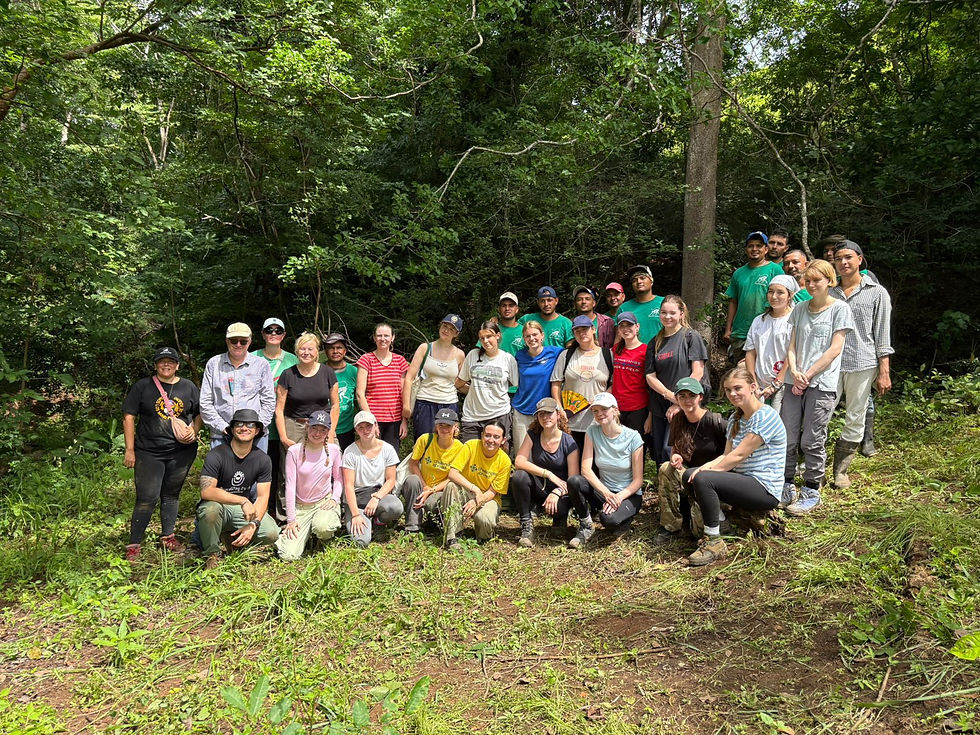
This season, more than 400 volunteers rolled up their sleeves to help, coming from Future Sense Foundation, Global Glimpse, Universidad de Panamá, UDELAS, ALAS Pro Tour surfers, Banco General, the Peace Corps, our Pro Eco Pelaos youth, and many independent supporters.
Each day began with training: how to plant correctly, how to work as a team, and what to expect in the rugged Azuero landscape. We warned them: it would be tough. The hills were steep, the sun intense, the mud slippery. But with hats, boots, water bottles, and good spirits, they became part of a living, breathing reforestation machine.
Side by side with our staff, volunteers planted row after row of trees. Behind them, our monitoring team followed with two essential tasks:
Georeferencing each tree using GPS, photographs, and species identification—so that every single one of the 63,000 trees can be tracked for the next five years.
Quality control, ensuring that seedlings were planted at the right depth, in the right conditions, and with the best chance of survival.
This means that our forests don’t just get planted—they are watched over, measured, and cared for, year after year.
At times, in just two hours, 1,000 trees found their new home in the soil. The sense of achievement was written on every face.

The Work Continues: Caring for the Forests
For us, reforestation does not end when the last seedling is planted. The months that follow are crucial to ensure that these young forests survive and grow.
First maintenance (60 days after planting): Our teams return to every site to clear around each seedling, removing tall grasses and brush so they do not “choke” the young trees. This rodajeo is essential for giving seedlings the light and space they need to thrive.
Second maintenance (late rainy season): We revisit the plots to repeat the clearing and check on tree health, ensuring that seedlings remain strong as the rains taper off.
Third maintenance (January): At the peak of the dry season, we establish firebreaks and reinforce perimeter fences. This protects the plots from two of the most common threats in Azuero: roaming cattle and accidental fires.
Only by combining planting with careful, staged follow-up can we truly ensure the long-term success of each reforestation site.
Lessons in Resilience

For many volunteers, especially those visiting from abroad, the first days were a shock: the heat, the humidity, the rain, the hills. But something shifted by day three. The challenge became a source of pride. What began as exhaustion turned into exhilaration. They realized that planting a forest isn’t just about putting trees in the ground—it’s about becoming part of something bigger than yourself.
A Season to Remember
On August 15th, 2025, we officially closed the planting season. While we had set out to plant 100,000 trees, budget constraints meant we reached 63,000. And yet, we could not be prouder. Each tree is a promise to future generations, a piece of the tropical dry forest reborn.
This achievement belongs to everyone: the women who raised seedlings with ancestral knowledge, the Magníficos who carried forests on their shoulders, the volunteers who braved the hills, and the donors and partners who made it all possible.
Together, we proved once again that with passion and love, extraordinary things can be achieved.

Thank you for being part of this journey. The Azuero Peninsula is greener because of you. 🌳💚


Comments